
Understanding Fire Pit Scale, Seating and Layout for Your Outdoor Space
Your fire pit is the centerpiece of your entire outdoor living space. Every chair position, every conversation, every evening spent outside revolves around it. That’s exactly why choosing the right size matters more than most people realize before they buy.
The most common decision point?
The choice between a 48-inch and a 72-inch fire pit. Both are popular as well as beautiful. But choosing the wrong size for your patio, or failing to plan the seating around it can leave you with a space that feels cramped, unbalanced, or simply uncomfortable to use. This fire pit size guide walks you through everything you need to know from dimensions, seating capacity and layout principles to the accessories that tie it all together.

Why Fire Pit Scale and Layout Matter
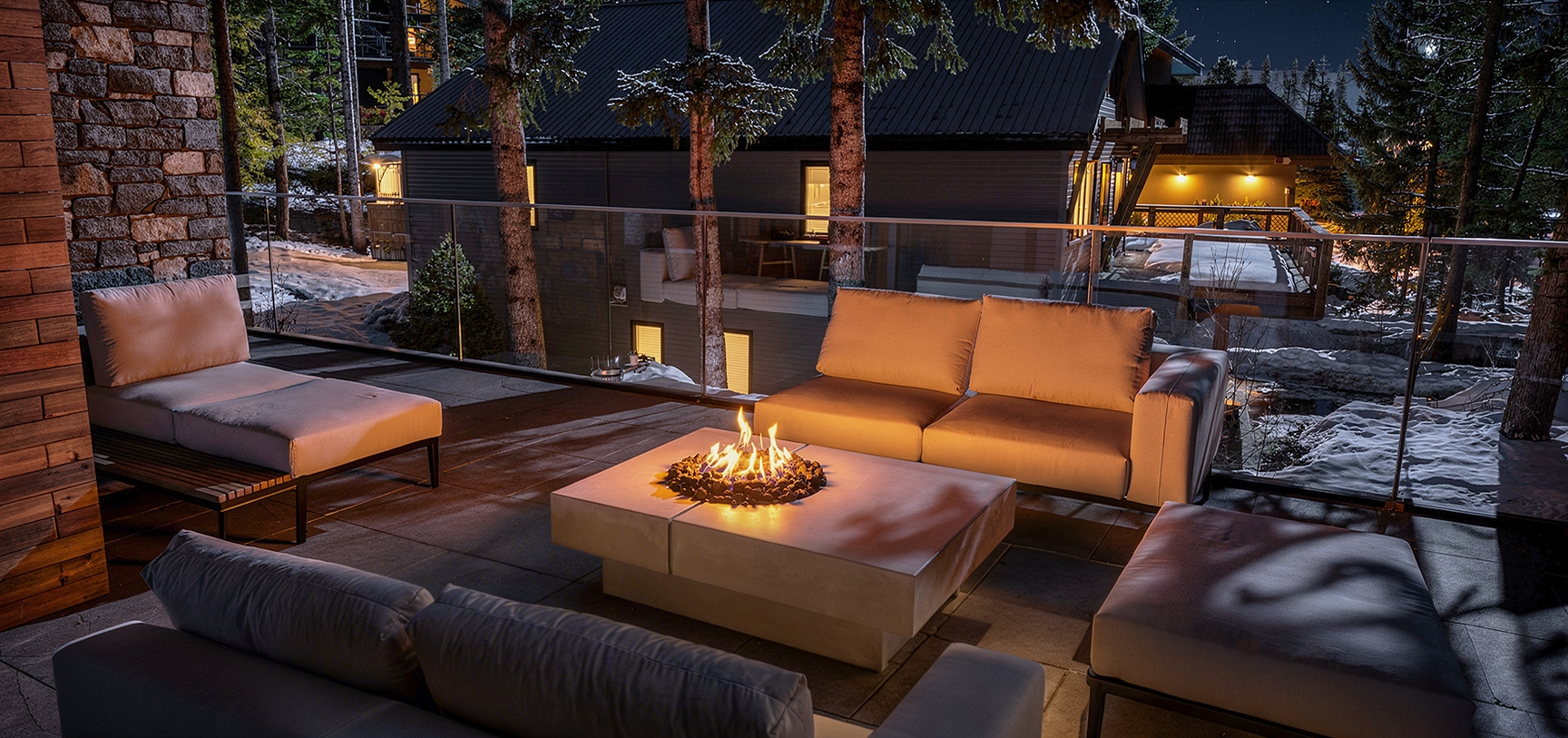
A fire pit doesn’t exist in isolation. It defines the visual anchor of your outdoor space, and every other design decision like where the chairs go, how wide the walking paths are, whether your patio feels intimate or open, flows from the size and placement of the fire pit at its center.
Get the scale right and the whole setup feels intentional. The seating circles naturally, conversation flows easily and the heat reaches every guest. Get it wrong, and the problems compound quickly:
- Too small for the space: The fire pit looks like an afterthought. Seating spreads out too far, the heat doesn’t reach and the visual balance is off.
- Too large for the patio: Seating gets crowded against the edges. Walking paths disappear and guests feel boxed in rather than gathered together.
- Poor layout: Even the right-sized fire pit can underperform if the seating isn’t arranged to complement it – too close, too far, or in the wrong configuration for the shape of your space.
Fire pit size directly affects comfort, seating capacity and overall outdoor experience. Starting with the right dimensions is the single most important decision in outdoor fire pit design.
Read our complete fire pit size guide for more information.
48" or 72"? A Simple Way to Choose
If you’re torn between sizes, here’s the fastest decision framework – first decide how many seats you’ll need.
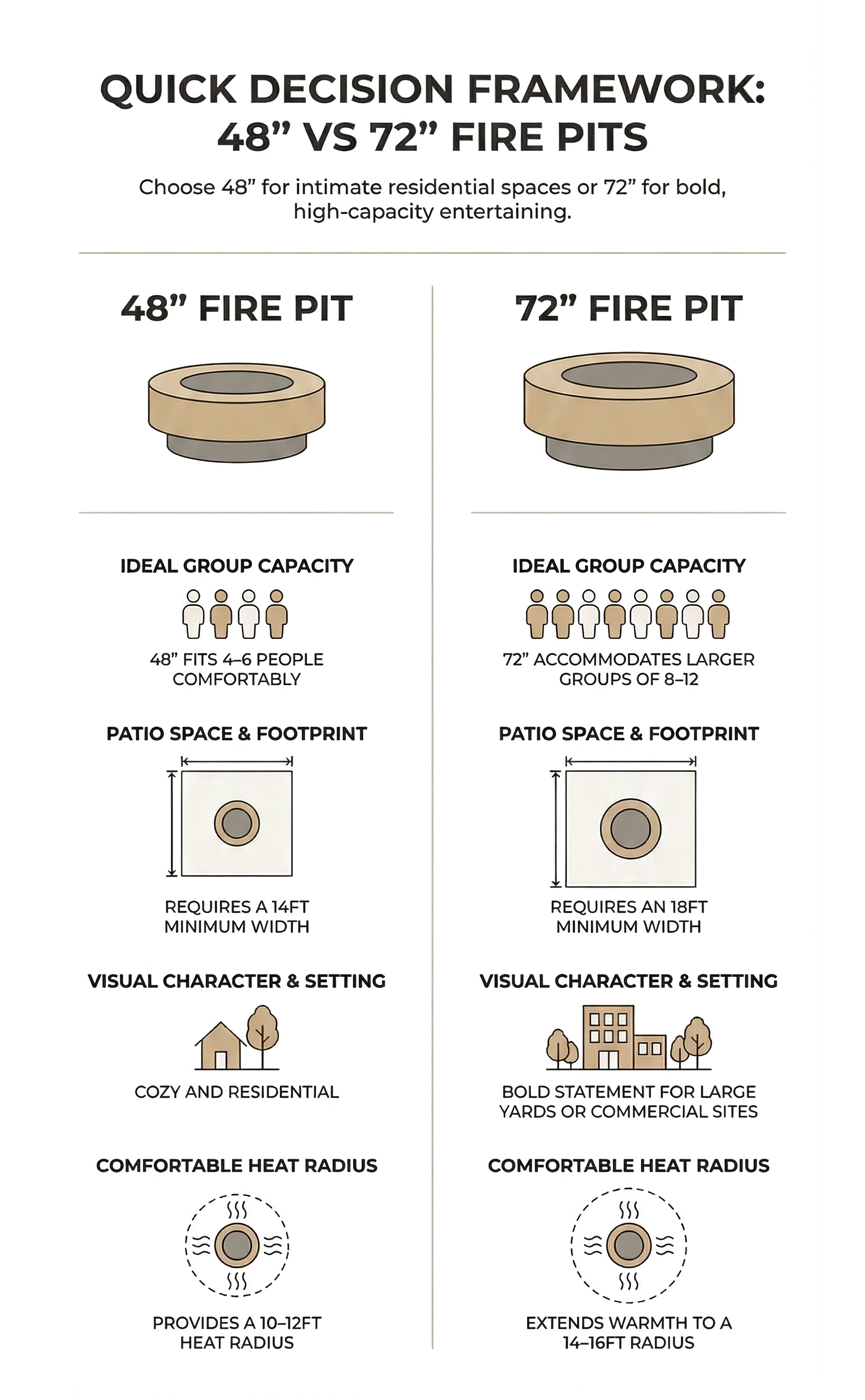
Choose a 48-inch fire pit if you want:
- An intimate seating arrangement for 4-6 people
- A fire pit that fits a small to medium patio (12-16 ft wide)
- A cozy conversation setup where everyone is close to the warmth
- A balanced, proportional look without overwhelming the space
- A manageable heat radius that warms a tight social circle
Choose a 72-inch fire pit if you want:
- A large, open entertaining space for 8-12 people
- A statement centerpiece for a generous patio, deck or commercial setting
- A social layout where multiple conversation clusters can form naturally
- Maximum visual impact, the kind of fire feature that defines the entire backyard
- Greater heat output that reaches guests seated farther from the flame
If you’re regularly entertaining larger groups or you have the outdoor space for it, the 72-inch is almost always the better long-term investment. No one ever wishes they had gone smaller.
Choosing the Right Fire Pit Size for Your Space
Beyond the 48 vs 72 comparison, choosing the right fire pit dimensions comes down to three practical considerations.
1. Your Available Outdoor Space
Measure your patio or backyard before you shop, not just the open area, but the usable area after accounting for furniture, walkways and any fixed structures like a pergola, garden wall, or outdoor kitchen.
As a general rule: fire pits require 6-16 feet of total space, including seating and clearance. That means a 48-inch fire pit needs at least a 14-foot total footprint from one side of the seating circle to the other. A 72-inch pit needs 18 feet or more.
Always maintain at least 36 inches of clear walking space behind the outermost row of seating. Guests need to be able to move without stepping over furniture or getting too close to the fire.
2. Your Seating Capacity
A simple seat-count formula:
- 2-4 people: A small fire pit (32-36 inches) or compact 48-inch model works well
- 4-6 people: A 48-inch fire pit is the right-sized centerpiece
- 6-8 people: A 60-inch model hits the sweet spot
- 8 or more people: A 72-inch fire pit is the clear choice
3. How You’ll Use the Fire Pit
Not all fire pit use cases are equal. The right size depends heavily on how you actually spend time outdoors:
- Family evenings: Intimate seating, 36” to 48-inch is ideal
- Regular entertaining: 60-72 inches keeps larger groups comfortable
- Outdoor dining: A fire table (flat-topped, space for plates, dining height) may suit better than a traditional bowl
- Commercial patio or hospitality setting: 72-inch or larger; statement scale is part of the experience
Lounge and relaxation: Low seating around a lower fire feature; proportion matters more than raw size
48" vs 72" Fire Pit: Scale and Heat Compared
Get better, I’ll wait for messages.Get better, I’ll wait for messages.Understanding the practical difference between these two sizes helps you visualize the finished space before you buy.

Visual Scale in Outdoor Design
A 48-inch fire pit reads as cozy and compact. It draws the seating inward and creates an intimate atmosphere, the kind of space where conversations happen naturally because everyone is close. It suits square or rectangular patios with a clear boundary and it pairs well with four individual club chairs, loveseats or most standard-sized sectional.A 72-inch fire pit makes an entirely different statement. It commands the space. It works as an organizing element for larger outdoor rooms, the visual anchor around which an oversized sectional, multiple conversation clusters, or a mixed arrangement of chairs and benches can settle. The fire pit belongs in open-plan backyards, pool surrounds and commercial hospitality settings where it is meant to be seen.A Designer's Guide to Proportion Outdoors
Choosing the right size fire pit is only half the equation. Placing it correctly, and building the seating arrangement around it with intention, is what separates a well-designed outdoor space from an expensive pile of nice furniture.
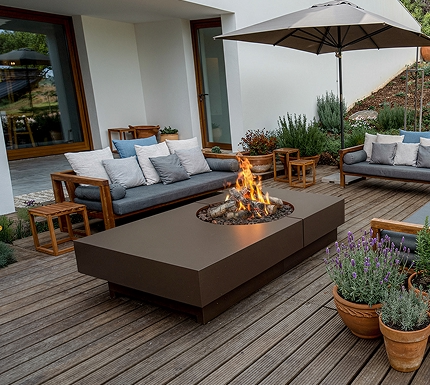
The rule of thirds: Your fire pit should occupy roughly one-third of the visual width of your seating zone. If the pit dominates the entire frame, it overwhelms the space. If it looks tiny against a large furniture arrangement, it loses its power as a focal point. The one-third ratio keeps it prominent without making it oppressive.
Match furniture scale to fire pit scale: A 72-inch fire table looks harmonious with a full U-shaped sectional. A 48-inch round pit looks intentional with four individual Adirondacks or club chairs. The furniture and the fire feature should feel like they belong to the same proportional family.
Negative space is part of the design: Leave 3-4 feet behind the outermost seating as open walking area. This isn’t wasted space, it’s what makes the seating zone feel like a destination rather than an obstacle course. A well-proportioned fire pit space enhances both safety and functionality.
Match pit shape to patio geometry: Round fire pits work beautifully in open, symmetrical spaces. Square fire pits like the Element complement structured rectangular patios and modern furniture layouts. Rectangular fire tables suit long, linear decks and dining-style setups.
How to Plan Your Seating Around the Fire
Once you’ve chosen your fire pit size, the layout of seating around it determines how comfortable and inviting the finished space actually feels. There are three core outdoor fire pit seating arrangements, each suited to different spaces and social styles.
The Circular Layout
The most common and most social arrangement. Chairs or a combination of chairs and a loveseat are placed in a full circle around a fire bowl, with equal spacing between each seat. Everyone has the same sightline to the flame, the same warmth, and the same access to conversation.
Best for: Round or square fire pits, open patios, groups where everyone tends to be part of one conversation. Check out our Zen and Aura fire bowls.
The Semi-Circle Layout
Half the circle, with the open side facing a view, a wall, or a complementary feature like a pool or garden. Works particularly well against a wall, fence, or pergola post. It uses the built environment as a natural backing and keeps the seating feeling grounded.
Best for: Patios with a defined back wall, spaces where one direction has a notable view, or when a sofa is part of the seating mix (sofas don’t work in full circles, they work beautifully in a semi-circle).
The Lounge-Style Layout
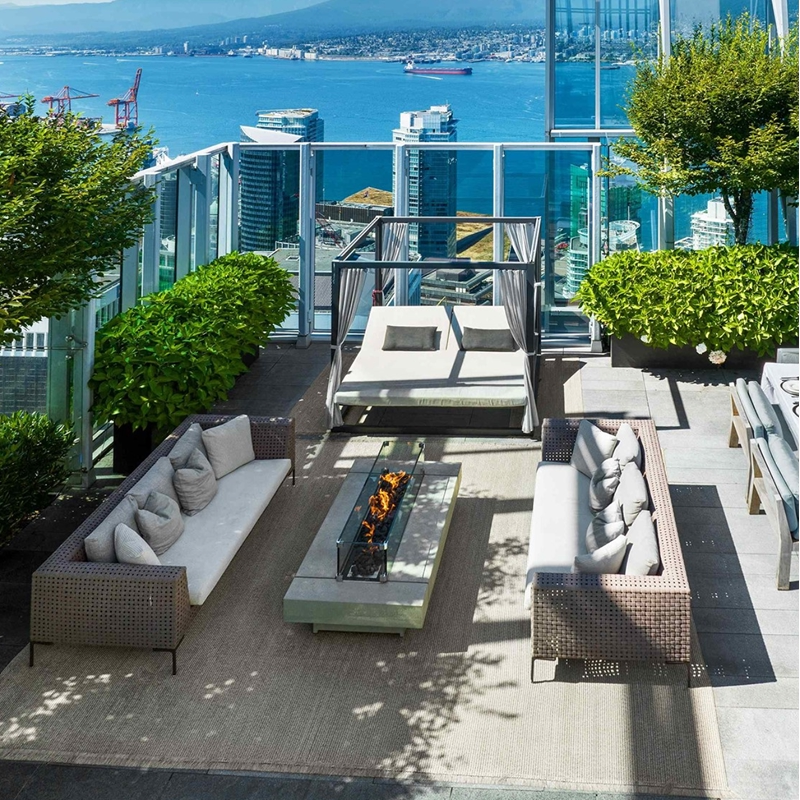
The most relaxed configuration. A sectional or L-shaped sofa on one or two sides of a fire table, with individual chairs completing the arrangement. This is the outdoor living room format, it feels less like gathering around a campfire and more like lounging in a high-end resort. It suits fire tables particularly well.
Best for: Rectangular fire tables, large patios, entertaining-focused spaces. You can check out the DreamCast Linea or Phantom series.
Ideal Seating Distance from the Fire Pit
The recommended distance from the fire pit edge to the front of any seat is 18-24 inches. This is the zone where the heat feels comfortable and the conversation is easy. Closer than 18 inches and guests may feel the heat as intense with wind directional changes; farther than 36 inches and the connection to the fire starts to feel too loose. 15 inches is the minimum clearance requirement from any seating (but not recommended for high BTU models).
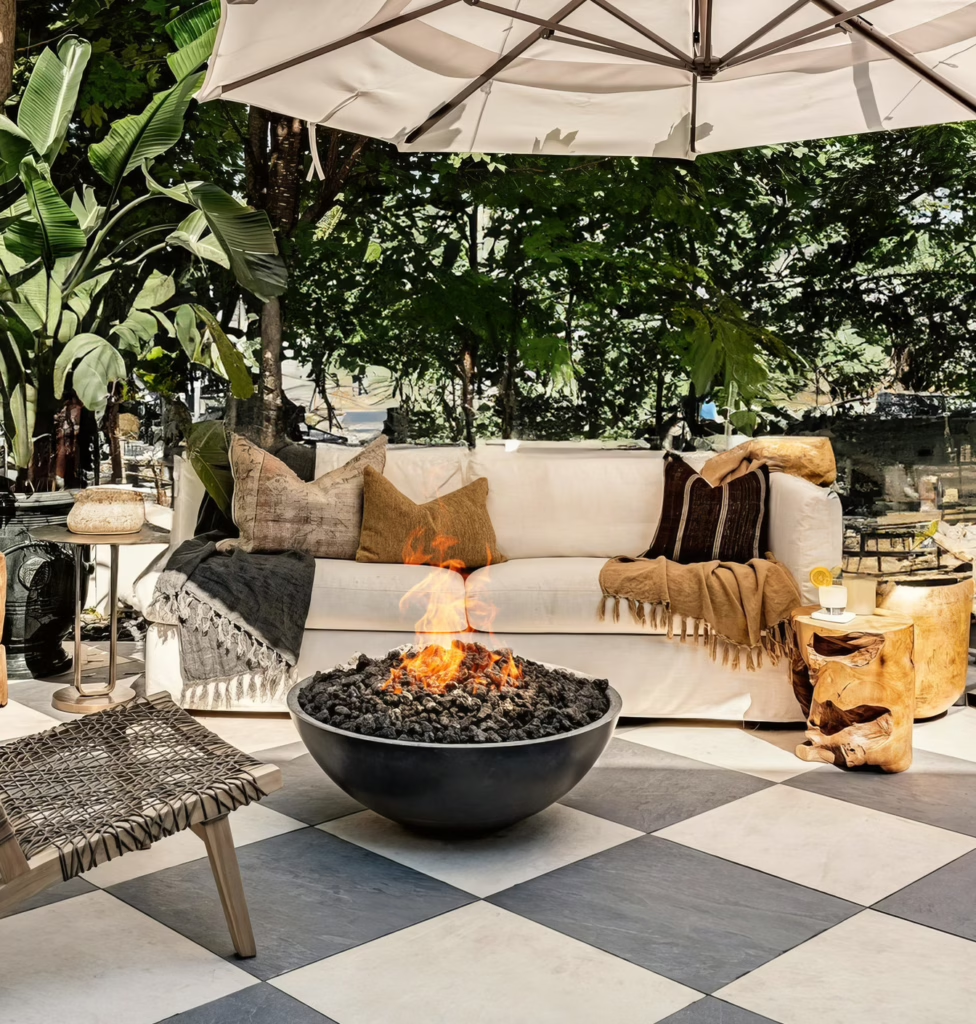
For your total layout area, plan for:
- 48″ fire pit: 14-16 ft total diameter including seating
- 72″ fire pit: 18-20 ft total diameter including seating
Always ensure at least one 36-inch clear exit path behind the seating on each side so guests can move freely.
Learn more about the safety standards for fire pits.
Accessories That Complete the Layout
The fire pit itself is the anchor, but the accessories are what make the space feel complete, safe, and ready for use season after season.
Ceramic Log Sets
A ceramic log set placed inside a gas fire pit transforms the look of the flame entirely, from an open gas burner into something that closely resembles a natural wood fire. Ceramic logs are crafted to replicate the texture, shape, and color of real split logs, and when the gas flame moves through them, the effect is remarkably convincing. Beyond aesthetics, they help distribute the flame more evenly across the burner, creating a fuller, more layered fire presence that suits the scale of larger fire pits particularly well. For anyone who wants the warmth and ambiance of a wood fire without the ash, smoke, or maintenance, a ceramic log set is the most effective single upgrade available.
Learn more about styling your gas fire pit with ceramic logs.
Wind Guards
A wind guard, typically a tempered glass panel that wraps around the burner, stabilizes the flame in breezy outdoor conditions and improves safety by containing embers. For gas fire pits in open patio settings, a wind guard is close to essential. It also elongates the use season, letting you enjoy the fire even on windier evenings.
Fire Pit Covers
A quality cover protects your fire pit through rain, snow, UV exposure and the off-season. DreamCast offers fitted fire pit covers sized to each product, the right cover for a 48-inch model is not the same as the right cover for a 72-inch. Protecting a concrete fire pit with a properly fitted cover can significantly extend its lifespan and keep the finish looking new.
Planning Checklist Before You Buy
Before placing your order, run through this quick checklist:
- Measure the usable outdoor space (width and depth available for the fire pit and seating)
- Decide on your seating capacity (how many people will regularly gather?)
- Choose between 48″ or 72″ using the decision framework above
- Plan your seating layout (circular, semi-circle, or lounge-style)
- Identify which accessories you need (cover, wind guard, fire glass)
- Confirm safety clearance: 18-24″ from pit edge to seats, 36″+ behind seating
- Match your fire pit shape and finish to your existing patio materials and furniture

Get In Touch
Still have questions about fire bowls or fire tables? Give us a call at 1-888-337-0597, and one of our team will be happy to help!
If you’re not ready to make any decisions right now, why not take a look at our product gallery for more inspiration, or follow us on Instagram to keep up with the latest trends and promotions.
FAQs
What size fire pit is best for 6 people?
For a group of 6, a 48-inch fire pit is the minimum comfortable size, but a 60-inch is the more relaxed choice if your patio space allows. As a rule, plan for roughly 18-24 inches of seating space per person around the circle. A 48-inch pit with a 14-foot total footprint fits 4-6 guests comfortably; if you’re regularly hosting closer to 6 or want some flexibility, stepping up to a 60-inch model gives everyone more room and a stronger heat presence.
How far should seating be from a fire pit?
The recommended distance is 18-24 inches from the edge of the fire pit to the front of any seat. This range keeps guests warm and engaged with the fire without feeling too close to the heat.
Is a 72-inch fire pit too big for a backyard?
It can be, if the patio isn’t large enough to support it. A 72-inch fire pit needs at least an 18-foot total layout footprint, that’s the pit plus the seating circle plus clear walking space behind the chairs. If your patio is under 16 feet wide, a 72-inch pit will feel oversized and may crowd the seating into the margins. The proportional choice for smaller patios is a 48-inch model.
How much space do you need around a fire pit?
Plan for at least 6 feet of clear space from the edge of the fire pit in every direction before any seating begins, that includes the 18-24 inches of seat-to-pit clearance plus enough depth for the seat itself. Behind the seating, maintain a 36-inch clear aisle for safe movement. Total layout footprint: approximately 14 feet for a 48-inch pit, 18 feet for a 72-inch pit.
What accessories improve fire pit layout?
Three accessories have the greatest impact on function and longevity. A wind guard stabilizes the flame and extends the usable season in breezy environments. A ceramic log set transforms the look of a gas fire pit, replicating the layered appearance of a real wood fire and distributing the flame more evenly across the burner. A fitted cover protects the fire pit surface from weather and UV damage when not in use. For a complete setup, side tables between seats and an outdoor rug anchoring the seating zone also make a meaningful difference in how polished and usable the space feels.
Should a fire pit be centered on a patio?
In some cases, yes, centering the fire pit within the seating zone creates equal access to warmth and sightlines for every guest, and it anchors the outdoor room visually. The exception is when the patio has a strong directional view (a pool, a garden, a landscape feature) or a wall on one side, in which case a semi-circle arrangement with the fire pit offset toward one edge can work well. The key is that the fire pit should feel like an intentional focal point, not an afterthought placed wherever space remained.
As a partner at DreamCast, she has been immersed in the decorative concrete industry since 2007, specializing in fire pits & mantels. With a passion for interior design her expertise drives innovative design and exceptional craftsmanship.


Author
Catherine Traschenko
Fire Products
Design Specialist
Author
Catherine Traschenko
Fire Products
Design Specialist